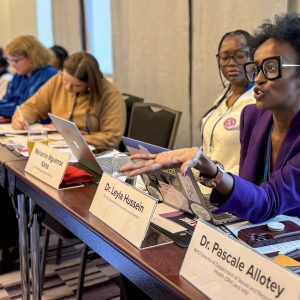
Two weeks on from the 70th Commission on the Status of Women (CSW70), I have been reflecting on what felt different this year and what it tells us about where the global women’s rights agenda is heading. Having attended many CSWs over the years, this one felt notably different – less inclusive, more politically charged, and more explicit in its pushback.
The CSW70 unfolded at a moment of visible strain on the global consensus around women’s rights. As UN Secretary-General António Guterres reflected in his town hall with civil society, “a bitter wind is blowing around the world”, and you could feel it in the negotiating rooms, in the side events, and in the conversations in the corridors.
This year was also marked by a historic shift. For the first time in decades, the Agreed Conclusions – the outcome document of CSW – were not adopted by consensus, but rather put to a vote, in an attempt to strip out long-standing language on gender and sexual and reproductive health and rights. Yet the outcome was decisive: the Conclusions were adopted by an overwhelming majority, with the United States as the only country voting against the final outcome. Despite the tension, the overwhelming support for the document sent a clear message – attempts to dilute the core commitments on women’s rights will be actively resisted by the international community.
The broader atmosphere reflected these shifts. Attendance was noticeably lower this year. Travel restrictions, geopolitical tensions, and decisions by some to disengage or boycott all contributed to that. CSW is usually one of the most vibrant global convenings for feminist movements, and this year it certainly didn’t feel that way.
For Orchid Project, attendance was not optional. In a moment where anti-rights narratives are actively trying to fragment the global agenda, it is critical that issues like female genital mutilation or cutting (FGM/C) are not pushed to the margins. FGM/C does not sit in isolation – it is directly tied to sexual and reproductive health and rights, to justice, and to the broader fight against violence against women and girls. Spaces like CSW are where those connections are defended and reinforced.
Yet, despite the tensions, or perhaps because of them, CSW70 also reminded us why these spaces still matter. There was a different kind of energy this year. More intentional. More honest conversations about strategy. More urgency in building alliances across movements. More willingness to think differently about how we respond to this moment. More solidarity and camaraderie.
CSW70 showed clearly that the pushback against women’s rights is well organised and is growing. But so too is the resolve to confront it. Because it is often in times of crisis that the true strength of collaboration comes forward.